Training that fits the way LTC really works

Learn best practices from the specialists who place your lines. Our programs are led by dual board certified CRNI and VA-BC nurses,. Clinical expertise is only half the story. Our curriculum is designed by Alice Cennamo, MSN, RN, CRNI, VA-BC, a master's-prepared nurse educator, so every course is built on sound teaching principles that help nurses truly understand, retain, and apply what they learn. The result is training that is evidence-based, backed by clinical expertise, and a strong academic foundation.

Learn in IV Bytes, practice on-site
Many of our programs are blended courses. Nurses complete the online portion in IV Bytes, our short, focused sessions that fit easily into downtime on any shift. Then they put it all into practice at an on-site skills session at your facility. What used to be a long, all-day class becomes multiple short on-site sessions scheduled around your nursing shifts, so you never have to pull staff off the floor.

Train new hires and re-certify your team with one subscription
Our facility subscription makes it easy to onboard new nurses as they join and keep existing staff current with ongoing recertification, all without scheduling a class from scratch every time.

Every course carries nursing CE credit, and we're happy to partner with your in-house educator.
 
Click here to contact us

Or call us at (888) 459-4913

IV Access and Infusion Classes for LTC

INFUSION IV THERAPY ESSENTIALS for LTC
Nurses atttend Evidence-Based Quality Training On a Convenient Schedule 

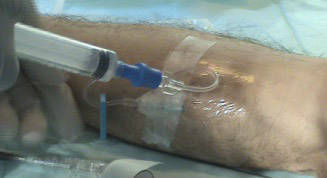
This program is the overall IV infusion certification and annual recertification program that meets Connecticut DPH requirements for LPNs and RNs to administer intravenous (IV) infusion therapy in Connecticut. Connecticut DPH standards for nursing IV infusion training are among the most rigorous, and this means that our program meets many states requirements for nursing administration of IV therapy. However, we do encourage nurses from states outside of Connecticut to check their own state's IV infusion therapy administration education and certification requirements prior to taking the program. In the program nurses learn I.V. infusion therapy and related venous access device care procedures from our IV access and infusion experts. Topics include gravity, volume controlled gravity vs. pump IV administration; saline, and heparin flushing; infusion start and disconnect; primary vs. secondary IV infusions, and central line care and maintenance (see curriculum sample details below).

How it works: Nurses are enrolled into our prerequisite Infusion Therapy Essentials online course by their manager or facility educator, and complete the course materials. In the meantime, we set up an onsite class date with a few times offered for a group training at your facility in Connecticut. 

Ideally the online classes are completed prior to attending the on-site class at the facility. We offer subscriptions to facilities for ongoing enrollment of staff in the program, so that new staff can start the program right away, and staff requiring recertification can easily re-certify when needed and not miss deadline mandates. In addition, facilities can opt to offer the program once, and staff will have access to the online programs for one year after enrollment. 

Click here to contact us

INFUSION THERAPY ESSENTIALS CLASS -  CURRICULUM SAMPLE

When, How, and Why

Indications for IV infusion therapy, and common therapies. Descriptions and how to use general equipment and supplies to administer IV infusion therapy fluids and medications.

Anatomy and Physiology
Fluid and electrolyte A&P, and requirements vs. signs and symptoms of imbalance. Benefits and risks of IV infusion therapy, alternatives, adverse events, and side effects. 
Devices, Care and Maintenance
Care of: peripheral IV catheters, PICC and other Central Line catheters, Midline catheters, and implanted Ports. Procedures: flushing, changes of dressings, extensions, and caps.
Intravenous Fluids

Indications for the types of intravenous fluids, detection and management of fluid and electrolyte imbalance, organ function, and nursing care plan considerations.

Antibiotics / Anti-Infectives
Therapeutic ranges, stability, and mixing of common antibiotic/ anti-infective medications. Expected outcomes, including lab results, and assessing effectiveness vs. adverse effects of therapy. 
Additional Therapies
Indications for diuretics, steroid therapy and the the expected effects, nursing assessment, and management of adverse effects of these therapies as well as other commonly administered therapies in LTC.

IV Access and Infusion Classes for LTC